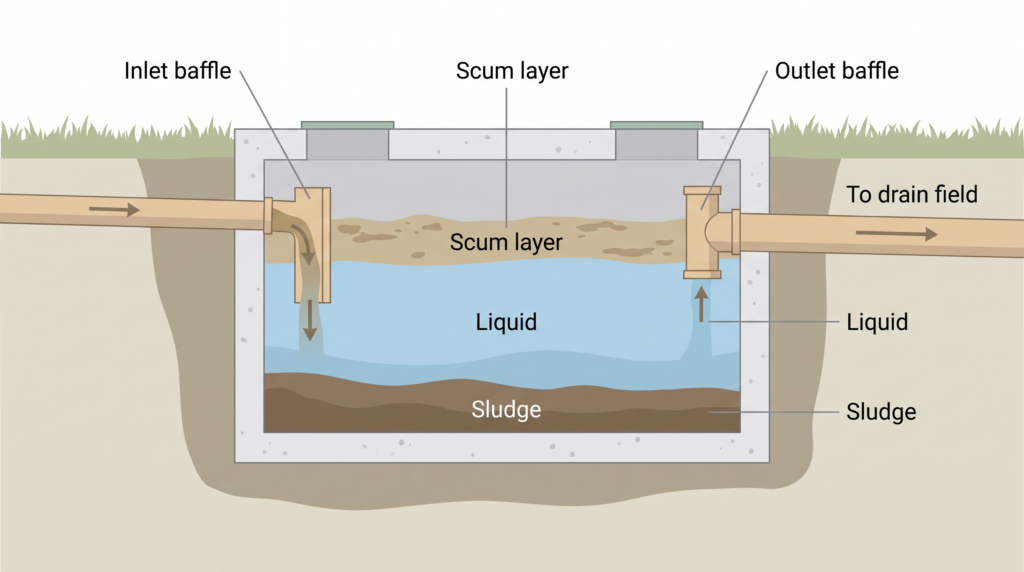
Septic Tank Baffle Damage Signs (Inlet vs Outlet)
A failed outlet baffle sends solids straight to your drain field, and you won’t see a symptom until the damage is done. Here’s what each baffle protects.
A failed outlet baffle sends solids straight to your drain field, and you won’t see a symptom until the damage is done. Here’s what each baffle protects.
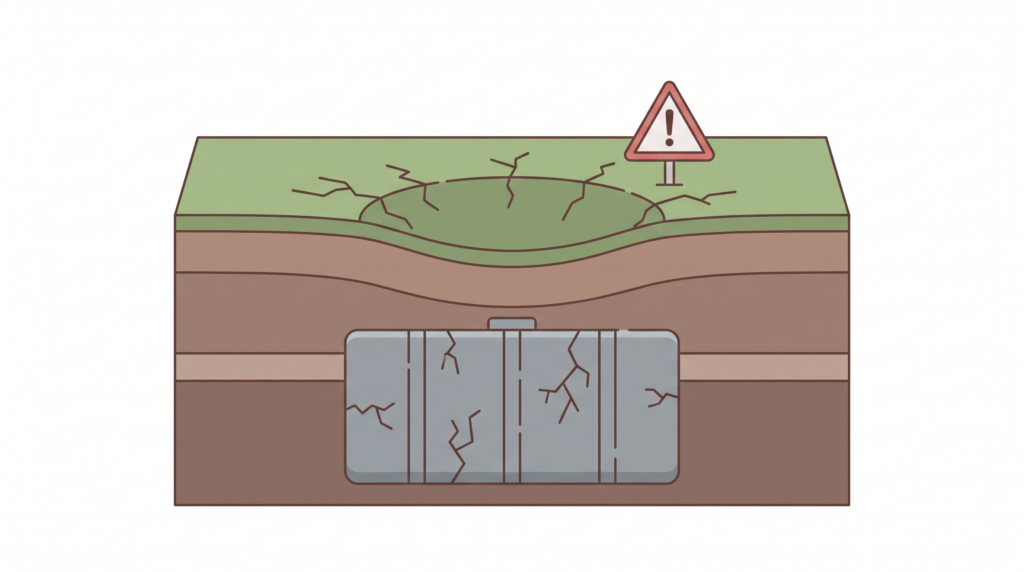
A collapsed tank is a fall and gas exposure hazard, not just a repair. Old, hidden tanks are the most dangerous kind, because the cover can look fine while the structure underneath is gone.

One task actually protects your system, one costs nothing, and the rest just catch problems early. Here’s what to do monthly, yearly, and every few years, organized by what it actually buys you.

A riser costs $300 to $600 installed and eliminates the $75 to $150 dig fee charged at every pump-out. It usually pays for itself within two or three service visits.
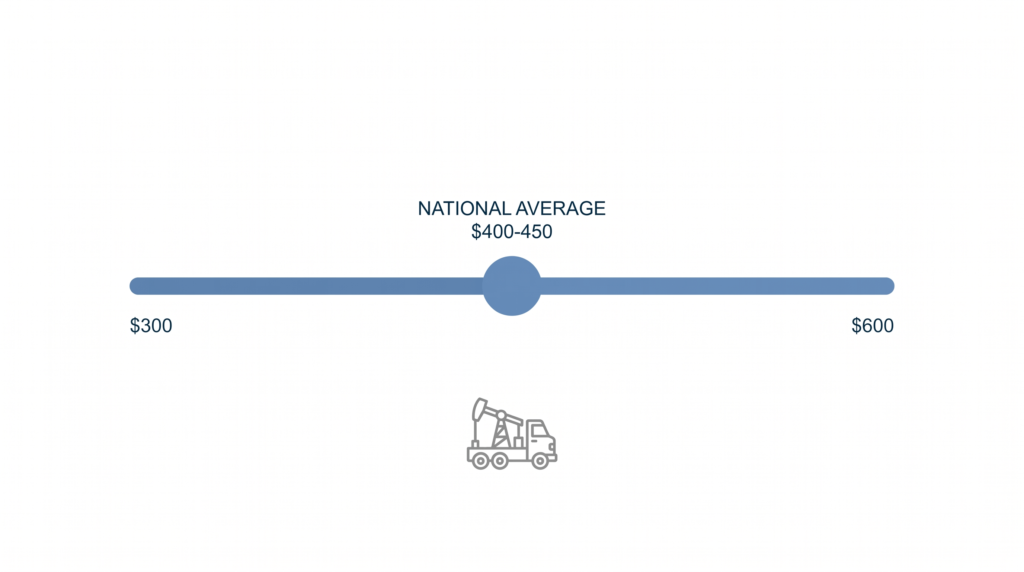
The national average is $400 to $450 for a standard tank. Here’s what actually moves that number, the fee almost nobody budgets for, and how it compares to the alternative.

Title 5 requires a licensed inspection before nearly every Massachusetts property sale, and a failed system has to be fixed within two years regardless of whether the sale goes through. Here’s exactly what that means.
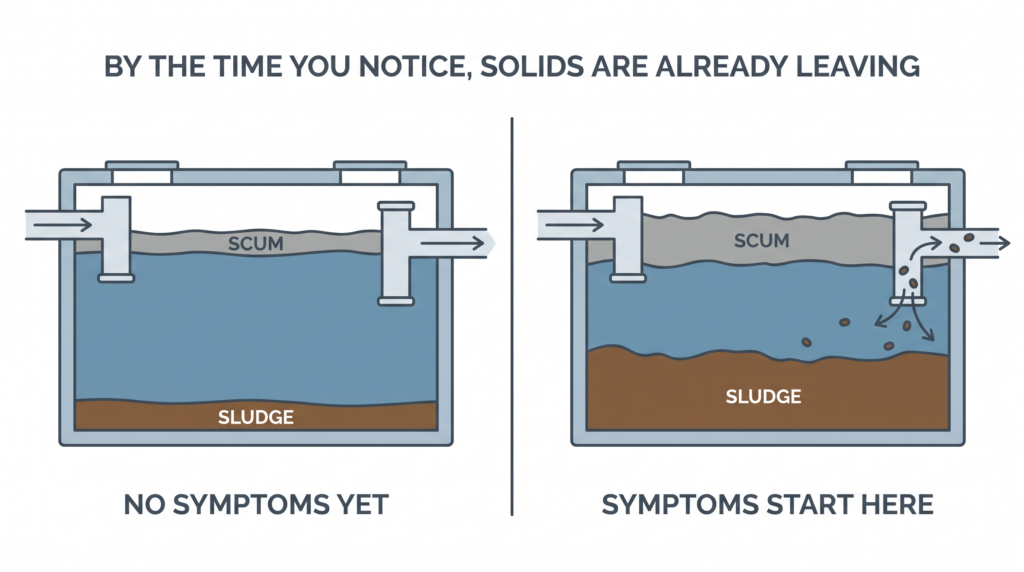
Every symptom that tells you a tank needs pumping appears after solids have already started reaching the drain field. Here’s what to watch for and why the calendar matters more.
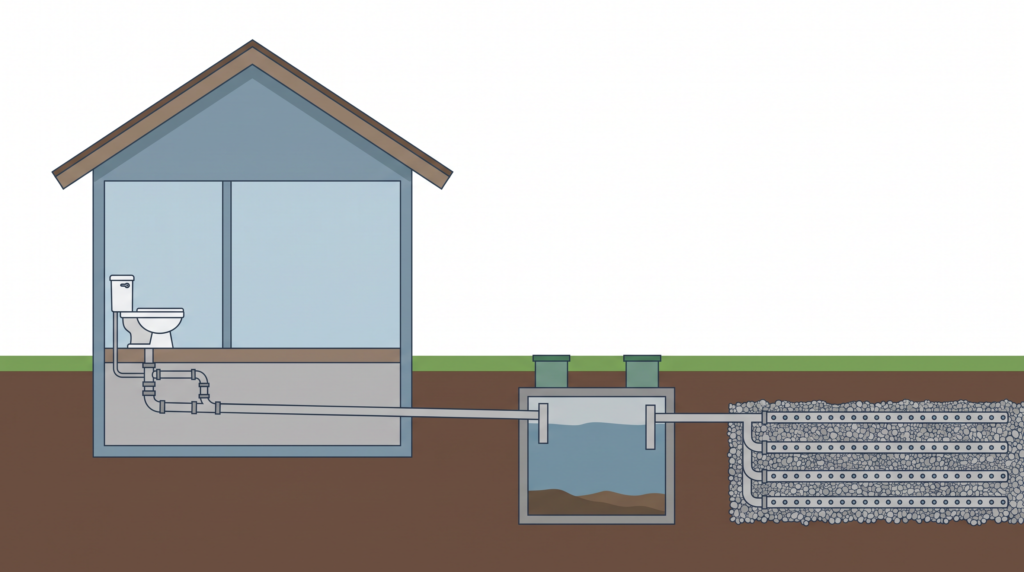
A gurgling toilet on septic usually means air is being pulled through your drain lines because wastewater can’t leave freely. Here’s how to tell which cause you have.

Roots don’t break into a healthy pipe. They find a joint that’s already leaking. That’s why monthly root treatments sold as prevention mostly aren’t.
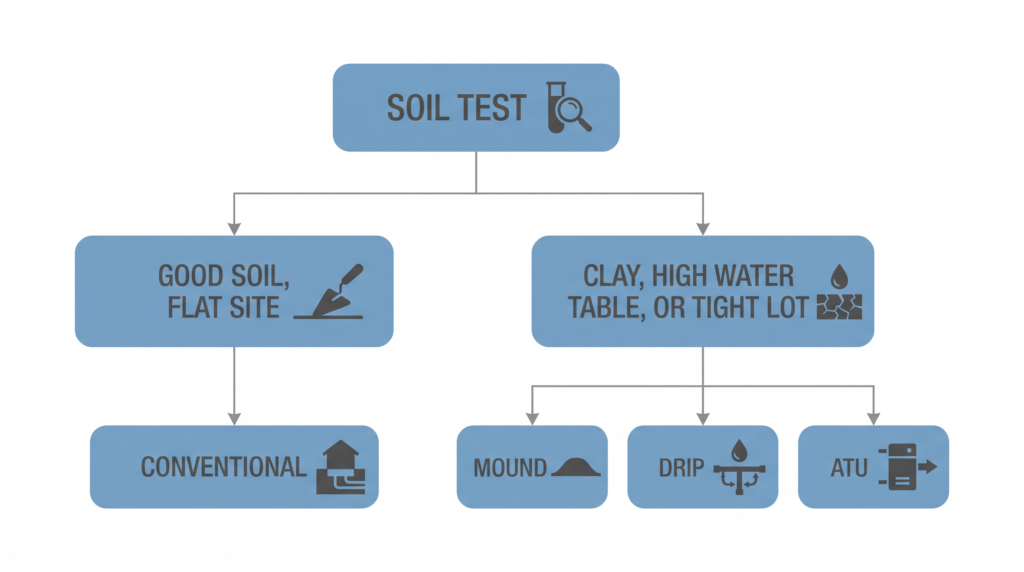
Your soil test decides this, not preference. Here’s how each alternative system solves a specific site problem, and what actually changes if you have one.